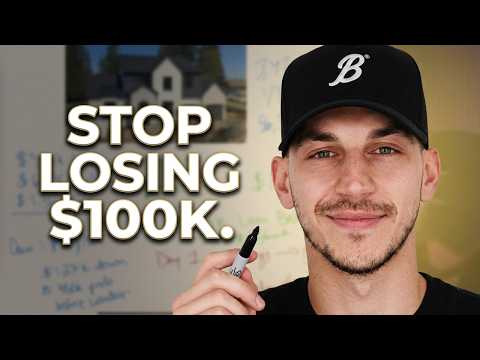
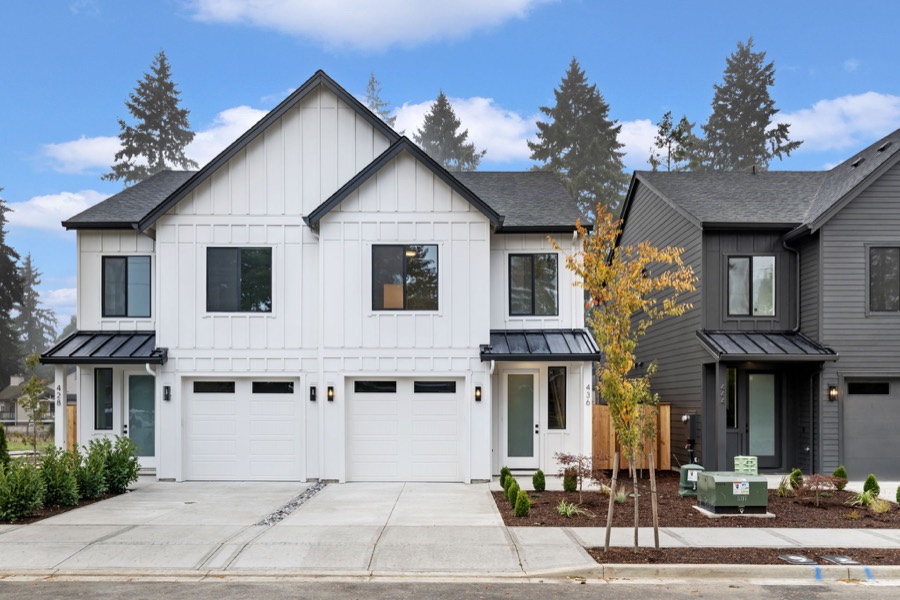
Arthur · 114 units
Location: Vancouver, WA
Farragut, Kenton, Ashley, Fircrest, Livingstone
Watch this project’s journey:
InstagramSee more on this project:
View the projectFinancing · Arthur the Developer
How construction loans actually work for developers in 2026, and how we get one built into a deal.
Full guide: Financing →Most investors, flippers, and wholesalers assume development is harder to finance than what they already do. It is the opposite. Construction rates in 2026 run from about 6% on a mortgage to 12% on hard money, and the rate is not what makes or breaks the deal. The structure is.
On a primary residence you put 5% down and the bank lends 95%, and they are underwriting you: income, credit, ability to carry the payment. The tax benefit is real, up to $500,000 of gain tax free if you live there two years.
On the investment side the bank lends 90% of land plus construction and you bring 10%. They do not look at your business history or income. They look at the deal, your down payment, and whether your builder can execute. Terms run 12 to 24 months at a higher rate and higher fees, but it is fast: the lender can close in as little as 7 days, and the appraisal is usually the long pole.
Whether the deal pencils, with at least 20% of equity in it. On a $500,000 build plus $100,000 of land, that is $600,000 of cost and they want to see roughly $120,000 of profit. Then they apply two ratios, and both have to clear.
A percentage of the finished value, typically 75% to 80%. On a $750,000 finished value at 75%, the maximum loan is $562,500.
A percentage of your actual project cost, typically 90%. On $620,000 of cost that is $558,000.
You bring the difference. On this example, $620,000 minus $558,000 leaves a $62,000 down payment, plus roughly $20,000 in closing, loan, title fees, and interest reserve, so about $83,000 or 13.5% all in.
That is why margin matters to the lender, not just to you. Thin equity pulls the LTV number down below cost, and you make up the gap in cash.
Email a lender a property address and ask for a loan and you will read as inexperienced. Arthur sends five things: the address, a project description with size and details, a preliminary plan set worked out with the builder, a construction budget, and a pro forma with the comparables that support it.
The budget takes about 10 minutes. Ask your builder for a previous project’s category breakdown, excavation, foundation, framing, lumber, and build from it. And keep the pro forma conservative: if construction is really $150 per square foot, submit $165. Lenders come down, they almost never come up, so asking for more later reads as a red flag.
Get three or four term sheets, then negotiate. Tell each lender you are talking to others and that you want a long relationship across many projects. Lenders will often drop their fee to win the first deal. The gap between two points and 1.2 points on a build is $3,000 to $5,000.
Say the build takes 8 months, permits slip and it becomes 10, then it takes 4 months to sell. That is 14 months against a 12 month loan, and the extension costs two points on top of the one and a half you already paid. Negotiate 18 to 24 months up front, even on a project you expect to finish fast. Buying the term at the start costs a quarter or half a point. Buying it in month 12 costs multiples of that, from a position of no leverage.
On a fix and flip you cannot see inside the walls before you buy, so surprises are structural to the model. In development you know the land, the utilities, the plan set, and the budget, and you make the budget concrete by signing a contract with every trade against the original number. Arthur lands within 5% of his projections, and on one project budgeted at $150 per square foot he finished at $138, because he asked the trades for volume discounts and got them.
Ready to stop watching and start building?
Join the BuildUp Challenge and book a call with our team.
Join the BuildUp ChallengeWatch more on Arthur's channel.
Roughly 6% on a primary residence mortgage up to about 12% on hard money. The rate is not what makes or breaks the deal though. The structure is, specifically whether interest is charged on your drawn balance or on the full loan from day one.
5% on a primary residence, where the bank lends 95% and underwrites your income and credit. 10% on an investment build, where the bank lends 90% of land plus construction and underwrites the deal, your down payment, and your builder rather than your income.
Whether the deal pencils with at least 20% equity, then two ratios. Loan to value is typically 75% to 80% of finished value. Loan to cost is typically 90% of your actual project cost. The lower of the two caps the loan, and you bring the difference in cash.
Five things: the address, a project description with size and details, a preliminary plan set worked out with your builder, a construction budget, and a conservative pro forma with the comps that support it. Sending only an address reads as inexperienced and invites questions.
Yes. Get three or four term sheets, tell each lender you are talking to others, and negotiate points, rate, and term. The gap between two points and 1.2 points on a build is $3,000 to $5,000. As Arthur puts it, a 30 second phone call can save what takes a week to earn.
Nationwide
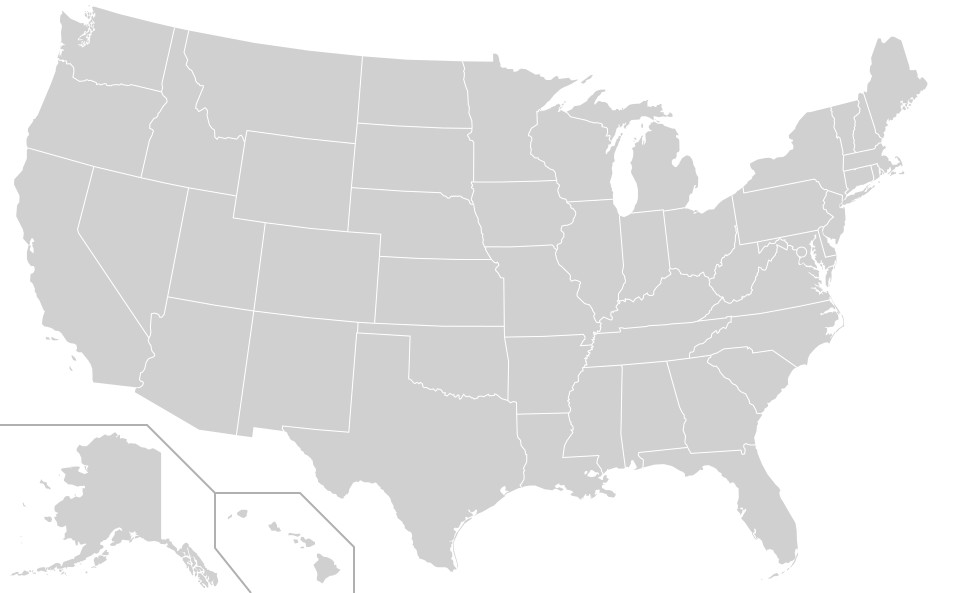
65+ active member builds, 300+ units in progress, across 20+ states. Click a market to see who is building there.
346
Units developing live
49
Markets
Location: Vancouver, WA
Farragut, Kenton, Ashley, Fircrest, Livingstone
Watch this project’s journey:
InstagramSee more on this project:
View the projectClick this market again for the next build here.
Your next step
New to development
A step-by-step challenge to line up your first deal, with our team beside you.
Join the ChallengeLive every week
Arthur and Ruben break down real deals and answer your questions in a live Q&A.
Join the live masterclassReady to build
Development consulting for people ready to put a real deal together now.
Explore consultingFree Resources
The templates, guides, and live sessions we hand every new member.
Real 2026 build costs for 43 US markets, from Arthur's own price map, with a live profit calculator.
Explore →Free PDFThe complete roadmap from land to sale, free.
Get it →Free AccessFree resources and every member story in one place.
Get it →Live WeeklyLive masterclass, weekly on Tuesdays. How to become a developer even with zero construction experience.
Get it →Free TemplateThe letter we use to reach lot owners directly, plus the training to use it.
Get it →Starter KitEverything you need to get moving on your first development, in one place.
Get it →Free CourseOur full 2.5-hour course on becoming a developer, land to exit, free on YouTube.
Get it →