Arthur · 114 units
Location: Vancouver, WA
Farragut, Kenton, Ashley, Fircrest, Livingstone
Watch this project’s journey:
InstagramSee more on this project:
View the projectLarger Projects · Arthur the Developer
A day onsite finishing 8 of 27 units, from cabinets and fixtures upstairs to how we communicate with the team.
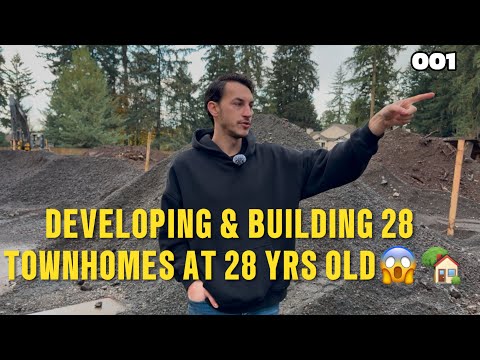
Full guide: Larger Projects →Fircrest was 28 townhomes. It is now 27, and the project is worth about $400,000 more because of it. This is a day on site at phase one, plus the redesign decision and the market read behind it.
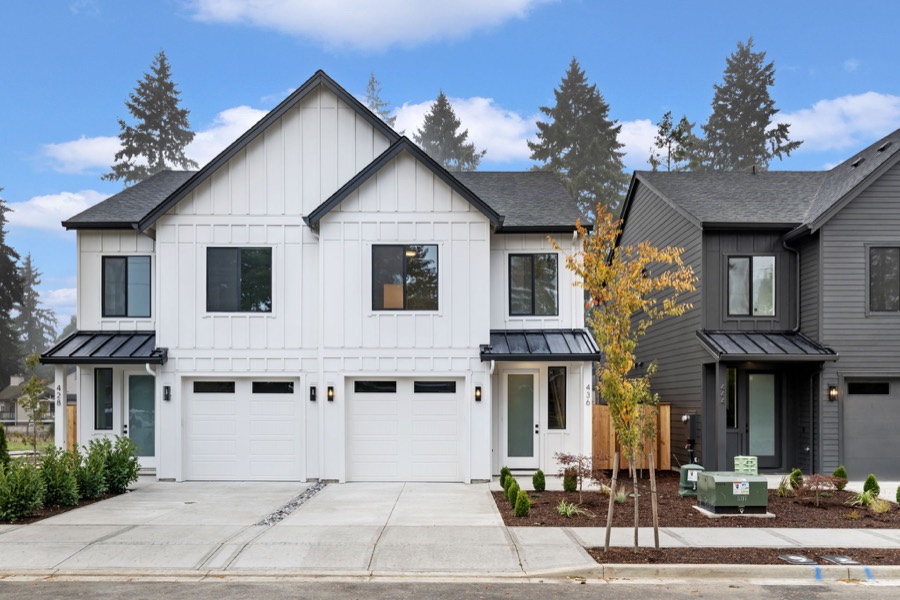
The original plan was 20 units without garages plus eight with. Arthur reworked it and added 10 garage units in the back, giving up one unit to do it. Garage units carry about $40,000 more per door. Ten of those is $400,000 of added value against the loss of one unit’s worth of building, and no additional construction cost for the value created.
There is a strategy question underneath it. No-garage units do sell in this market, and they typically trade as multifamily, where a buyer rents them out and sells the building as a whole. Arthur is going the other way: condo converting and selling each unit separately, which is where garages earn their premium.
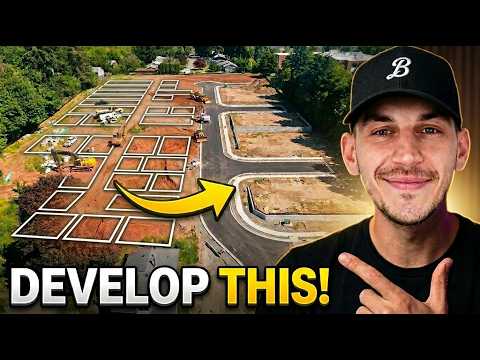
Phase one is eight units out of the total for a specific reason: you do not want interest running on 27 townhomes at once. Build eight, sell them off, then start the next group. The interest you are not paying on 19 unbuilt units is real money.
What real estate actually sells for there is the first and clearest signal.
This site sits half a mile off the second busiest road in a county of 600,000 people, close to the freeway. Traffic is a proxy for demand.
Restaurants, retail, grocery, schools. Ask whether you would want to live there if everything you need is close. Prices in that pocket run higher than the outskirts of the county for exactly that reason.
There are not many duplexes in this immediate neighborhood, so the process widens in steps. Start inside the neighborhood. If nothing matches, look for townhomes further out. Townhomes that sold on 138th, twenty streets from a site on 117th, are not in the neighborhood but are still in the same market. You can run comps at close to a city level as long as you hold the result loosely and know it may not be the final price here. Those comps were selling in the $430,000s and $450,000s, which supports a $450,000 price point.
Two buildings are near done and two are about 45 days behind. The first building’s siding is complete, mixing lap and board and batten for a modern look painted black and white; the second is going full farmhouse in lighter colors. Metal roofs throughout.
Inside, drywall is textured, finish carpentry material is delivered and doors are going in, and flooring and cabinets are done with protective board over the new floors. Two to four weeks out, with paint the long pole at 4 to 5 days. On the back buildings, excavation and foundation are done and framing is finishing, with roofers already on site for the completed building and windows on site ready to install.
Each unit is a 3 bed 2.5 bath at 1,500 square feet. Estimated at about $160 per square foot including permitting, architectural, and design fees plus hard costs, so $240,000 a unit before the 10% builder fee. Actual is landing closer to $142, roughly $216,000 of savings across eight units, because construction pricing followed the market down.
Arthur’s read is straightforward: projects bought at high prices in a high-rate window were hard to sell into the following years, while projects picked up during the harder stretch sold well afterward. Land is cheaper now, and his current pickups carry better margins because of it. If rates come down later, the market moves up, and you already built at the lower cost basis, which means more equity than you underwrote for.
Ready to stop watching and start building?
Join the BuildUp Challenge and book a call with our team.
Join the BuildUp ChallengeWatch more on Arthur's channel.
Better units. Fircrest went from 28 townhomes to 27 because adding 10 garage units in the back cost one unit of building. Garage units carry about $40,000 more per door, so that is roughly $400,000 of added value for no additional construction cost. Value per door beats unit count.
Interest. Phase one at Fircrest is eight units out of 27, because you do not want interest payments running on 27 townhomes at once. Build eight, sell them off, then start the next group. The interest you are not paying on unbuilt units is real money.
Three signals. Comparables, what real estate actually sells for there. Traffic, since this site sits half a mile from the second busiest road in a county of 600,000 people. And what is around it: restaurants, retail, grocery, and schools. Prices in those pockets run higher than the outskirts.
Widen in steps. Start inside the neighborhood. If there are no duplexes, look for townhomes further out. Townhomes that sold twenty streets away are not in the neighborhood but are in the same market. You can comp close to a city level as long as you hold the number loosely.
It changes what you build. No-garage units typically trade as multifamily, where a buyer rents them and sells the building whole. If you plan to condo convert and sell each unit separately, garages earn their premium, which is exactly why the Fircrest site plan was reworked to add them.
Nationwide
65+ active member builds, 300+ units in progress, across 20+ states. Click a market to see who is building there.
346
Units developing live
49
Markets
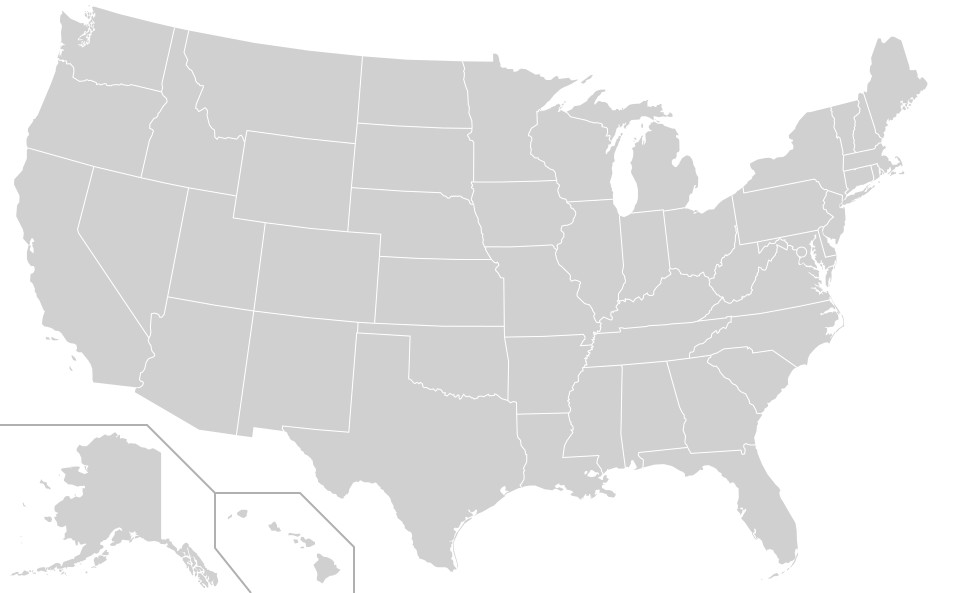
Location: Vancouver, WA
Farragut, Kenton, Ashley, Fircrest, Livingstone
Watch this project’s journey:
InstagramSee more on this project:
View the projectClick this market again for the next build here.
Your next step
New to development
A step-by-step challenge to line up your first deal, with our team beside you.
Join the ChallengeLive every week
Arthur and Ruben break down real deals and answer your questions in a live Q&A.
Join the live masterclassReady to build
Development consulting for people ready to put a real deal together now.
Explore consultingFree Resources
The templates, guides, and live sessions we hand every new member.
Real 2026 build costs for 43 US markets, from Arthur's own price map, with a live profit calculator.
Explore →Free PDFThe complete roadmap from land to sale, free.
Get it →Free AccessFree resources and every member story in one place.
Get it →Live WeeklyLive masterclass, weekly on Tuesdays. How to become a developer even with zero construction experience.
Get it →Free TemplateThe letter we use to reach lot owners directly, plus the training to use it.
Get it →Starter KitEverything you need to get moving on your first development, in one place.
Get it →Free CourseOur full 2.5-hour course on becoming a developer, land to exit, free on YouTube.
Get it →