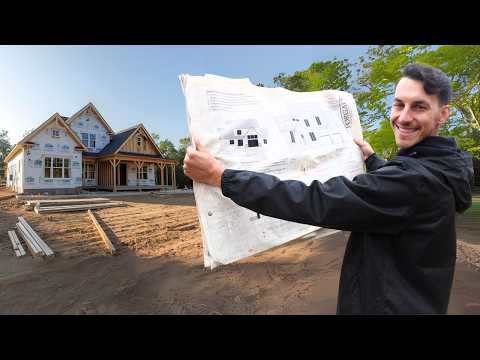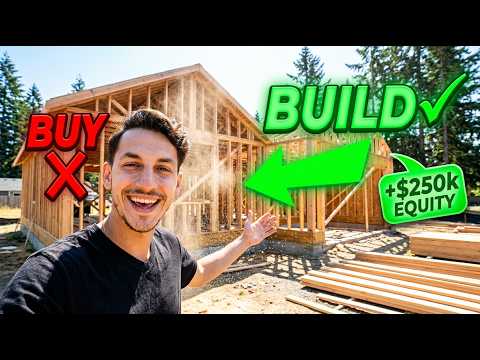
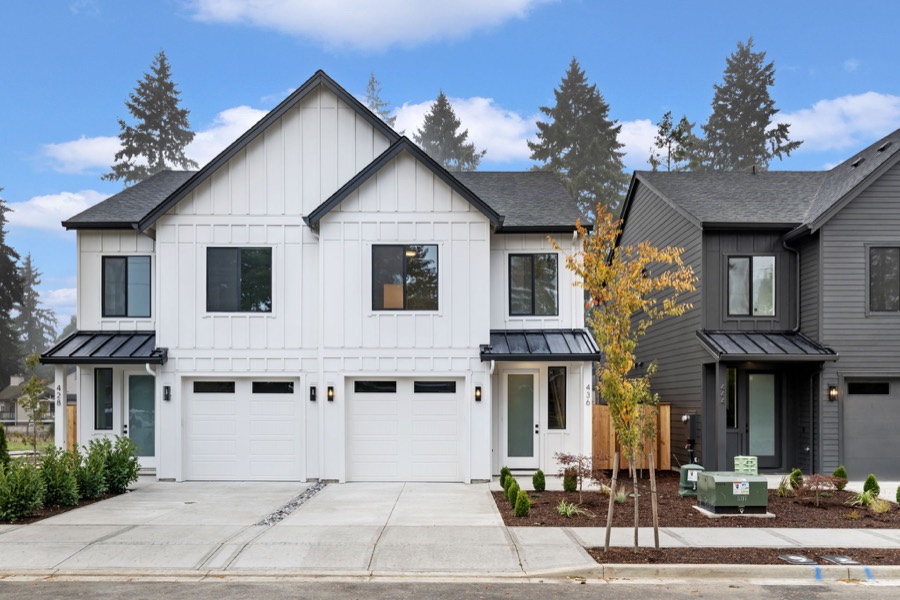
Arthur · 114 units
Location: Vancouver, WA
Farragut, Kenton, Ashley, Fircrest, Livingstone
Watch this project’s journey:
InstagramSee more on this project:
View the projectStep 5 of the series: how we finance a build, from the loan we ask for to the way the lender releases funds.
Full guide: The 7 Steps →Step 5 of the seven step series. We push people to build a personal house first for one reason: the financing is dramatically better than anything on the investment side, which makes the cash on cash return higher on a smaller check. Here is exactly what a construction to permanent loan needs from you.
Go to a local community bank. Very few commercial lenders write a 95% loan to cost construction product, and that is the product you are hunting for. Names vary by bank: construction to permanent, builder loan, owner builder loan. What matters is the 95% loan to cost.
Loan to cost means exactly what it says. A $100,000 lot plus $300,000 of construction is $400,000 of cost, so a 95% loan is $380,000 and you bring the $20,000 difference plus closing costs, call it $8,000 here. The rule of thumb is 5% down and 2% to 4% closing, so plan on 7% to 10% out of pocket.
The lender wants construction experience on the file. If you do not have it, that is not a wall. Hire a builder on a cost plus contract, typically a 10% fee, so $30,000 on a $300,000 build. The fee goes into the loan, he manages the project start to finish, he hands you receipts, and the contract between you and him is what lets you qualify on his experience.
Start from square footage times cost per square foot, then get real bids. On a 1,500 square foot home at $150 per foot that is $225,000, plus a $25,000 builder fee. The bank hands you a blank spreadsheet and you fill in foundation, framing, plumbing, and every other line with your builder.
This comes straight out of step 3 and step 4, with the site plan approved. The appraiser works from it.
How do you appraise a house that does not exist? You describe it. Foundation type, flooring type, windows, heating system, finish level. The appraiser uses that to run comparables and stamp a value.
Tax returns or W2s, and a credit score around 680 or better. A co-signer with a stronger score works too. We have seen that route close plenty of times.
The appraiser values the house from the plan set and the spec sheet. If the value supports the 95% loan to cost math, you are clear to close and you break ground. That is the handoff into step 6.
Ready to stop watching and start building?
Join the BuildUp Challenge and book a call with our team.
Join the BuildUp ChallengeWatch more on Arthur's channel.
A construction to permanent loan, sometimes called a builder loan or owner builder loan, from a local community bank. Look specifically for a 95% loan to cost product. Very few commercial lenders write them, which is why the local bank matters.
The loan is measured against cost, not finished value. A $100,000 lot plus $300,000 of construction is $400,000 of cost, so the bank lends $380,000 and you bring the $20,000 difference plus closing costs. Rule of thumb: 5% down and 2% to 4% closing, so 7% to 10% out of pocket.
Yes. Hire a builder on a cost plus contract, typically a 10% fee, so $30,000 on a $300,000 build. The fee goes into the loan, he runs the project and provides receipts, and the contract lets you qualify on his experience instead of yours.
Four. An itemized construction budget built from real bids, the full construction plan set with the approved site plan, a spec sheet describing the finishes, and your financials. The spec sheet is how an appraiser values a house that does not exist yet.
Around 680 or better, along with tax returns or W2s. If your score is lower, a co-signer with a stronger score works. We have seen that route close plenty of times.
Nationwide
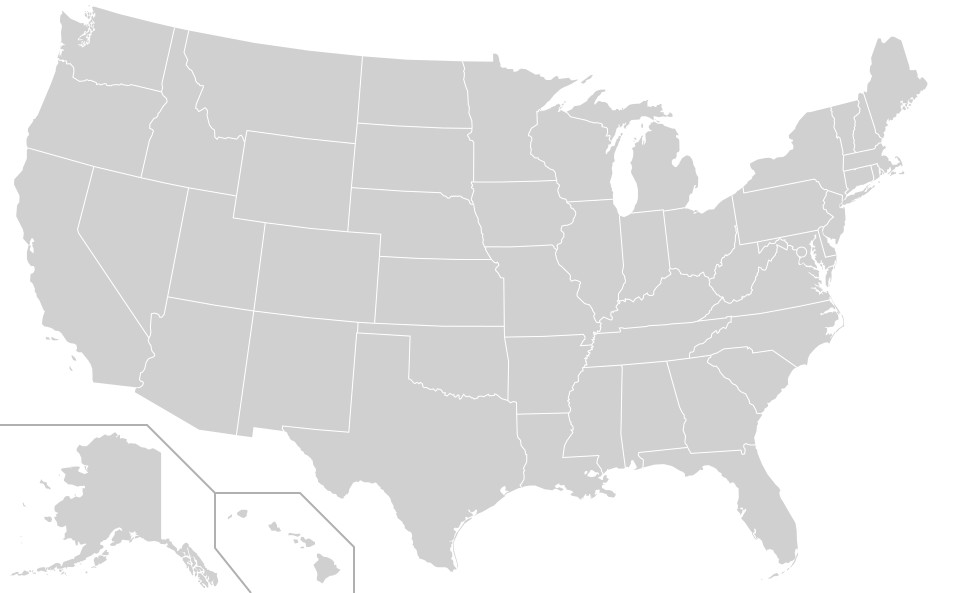
65+ active member builds, 300+ units in progress, across 20+ states. Click a market to see who is building there.
346
Units developing live
49
Markets
Location: Vancouver, WA
Farragut, Kenton, Ashley, Fircrest, Livingstone
Watch this project’s journey:
InstagramSee more on this project:
View the projectClick this market again for the next build here.
Your next step
New to development
A step-by-step challenge to line up your first deal, with our team beside you.
Join the ChallengeLive every week
Arthur and Ruben break down real deals and answer your questions in a live Q&A.
Join the live masterclassReady to build
Development consulting for people ready to put a real deal together now.
Explore consultingFree Resources
The templates, guides, and live sessions we hand every new member.
Real 2026 build costs for 43 US markets, from Arthur's own price map, with a live profit calculator.
Explore →Free PDFThe complete roadmap from land to sale, free.
Get it →Free AccessFree resources and every member story in one place.
Get it →Live WeeklyLive masterclass, weekly on Tuesdays. How to become a developer even with zero construction experience.
Get it →Free TemplateThe letter we use to reach lot owners directly, plus the training to use it.
Get it →Starter KitEverything you need to get moving on your first development, in one place.
Get it →Free CourseOur full 2.5-hour course on becoming a developer, land to exit, free on YouTube.
Get it →