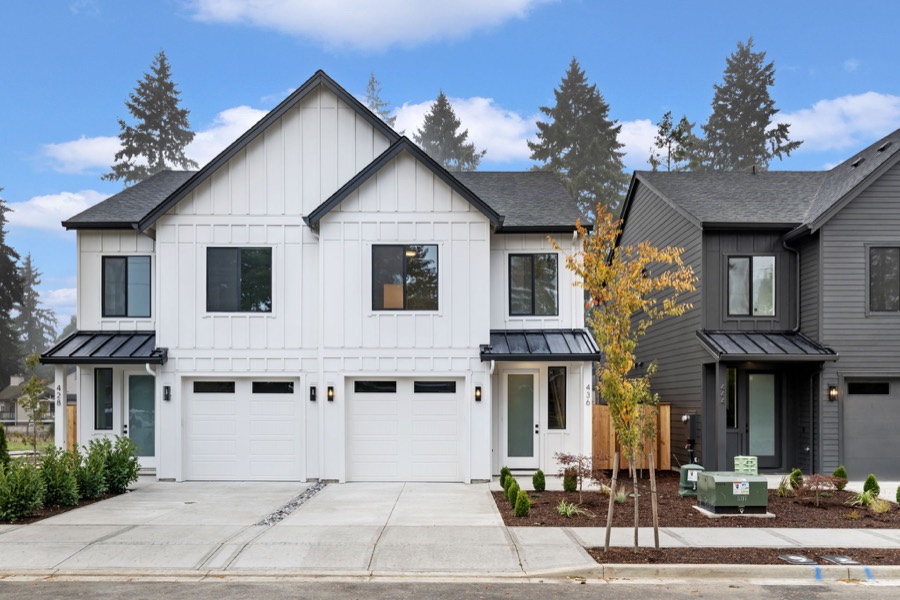
Arthur · 114 units
Location: Vancouver, WA
Farragut, Kenton, Ashley, Fircrest, Livingstone
Watch this project’s journey:
InstagramSee more on this project:
View the projectThe 7 Steps · Arthur the Developer
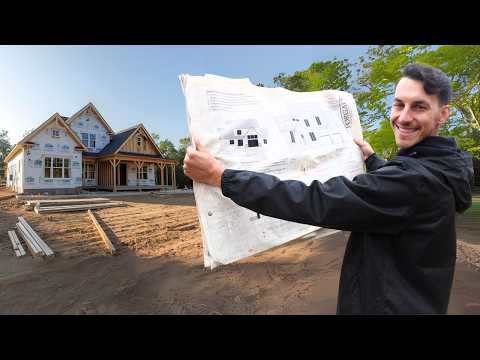
Step 1 of the 7-step series: how we look at land before we buy, and what makes a lot actually buildable.
Full guide: The 7 Steps →Step 1 of the seven step series. People say there is no land left, and what they mean is there is no cheap land left on the MLS. There are only two ways to buy a lot, on the market or direct to the owner, and roughly 80% of what we do is the second one. Here is how both work, and the math that tells you what to search for in the first place.
Start at the loan, not the listing. Say you are pre-approved for a $600,000 construction cost. At 5% down that is $30,000, plus about 2% in closing costs, so 7% or roughly $42,000 out of pocket. If the finished home is worth $750,000, the rule of thumb is that the land should be about 20% of that finished value, so around $150,000.
Arthur has never closed a deal that a buyer’s agent found for him. He finds them himself on the public portals and then sends them to his agent to write the offer. The skill is filtering. Search a county and you get a thousand listings you cannot underwrite. Instead: draw two or three zip codes on the map, set the lot size you actually want, set the price band you just calculated, watch days on market, and turn on instant alerts so new listings hit your email or phone the day they post.
The MLS is used car shopping. You know you want a 2015 F-150, so you look at a hundred of them hoping two are deals, and the moment you call on the good one there are three other people scheduled to see it. Good land goes pending in one to three days. The listings that sit for six months sit because they are overpriced, which is exactly why an aggressive offer on a stale listing sometimes works.
Direct to seller removes the telephone game, removes the competing offers, and gives you the one thing that actually matters on a personal house build: control of the closing date. The 5% down owner builder loan requires approved building permits in hand before you can close, and permits take one day in St. John, Indiana, 60 days in Vancouver, Washington, and six to twelve months in Portland, Oregon. You cannot win that with a seven day cash close.
An owner who has held a lot for ten years and was not planning to list it does not care about 90 extra days. That conversation is simple and honest: I can pay you this price, and I need 60 to 90 days because my loan requires approved permits before it funds.
Put both offers in front of the seller. Offer A is $120,000 with a fast close. Offer B is $140,000 and you need 90 days for permits. Arthur has never had a seller take the lower one. Spread them further if you want, $40,000 to $50,000 apart, and the quick close stops being tempting at all. You cannot run this play against multiple cash offers on the MLS, which is another reason off market is where the leverage lives.
Seller finance means the owner carries a note, recorded on title, while you own the land. On a recent $480,000 property, hard money would have wanted 20% to 25% down and about 10% annual interest. Instead of guessing at a percentage, Arthur asked the seller how much cash he actually needed. The answer was $20,000. The deal closed at $20,000 down and 6% annualized paid monthly, interest only, with the balance paid off when the project closed out.
The long term contract is the other route, and it is the one that risks the least. You write a 15 to 30 day feasibility window, then a closing that happens three days after permits are approved, with a hard outside date such as 90 days. Until then the only money out of your pocket is earnest money in escrow, plus what you spend on plans. The seller holds the land while you get it approved.
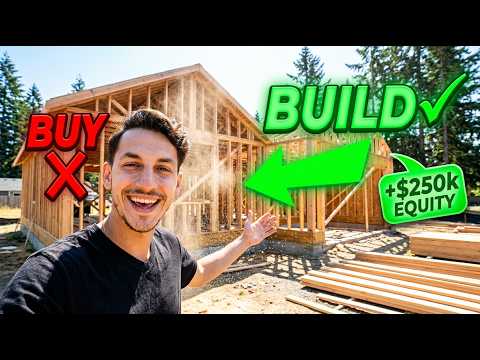
The con is time. Six to twelve months, assembling a team, learning a process you have not run before, and getting creative on closing terms while somebody else waves a seven day close. The pro is $100,000 to $250,000 of equity on day one, and on a personal home the IRS exempts up to $250,000 of gain if you file single and $500,000 if you file jointly. You also pick your own finishes, which is worth more than people admit.
Ready to stop watching and start building?
Join the BuildUp Challenge and book a call with our team.
Join the BuildUp ChallengeWatch more on Arthur's channel.
Two ways only: on the market through the MLS and public portals, or off market direct to the owner. About 80% of our deals are off market, because that is where you can negotiate the closing timeline you need for permits.
Multiply the finished value of the home by 20%. If the finished house is worth $750,000, the lot target is around $150,000, so search a band of $100,000 to $200,000 and stretch the top to $250,000 so you can make aggressive offers on overpriced listings.
Three reasons: you negotiate directly instead of playing telephone through agents, you are not competing against nine other offers, and you can negotiate terms. That last one matters most, because the 5% down owner builder loan requires approved building permits in hand before it funds.
It depends entirely on the jurisdiction. We have pulled permits in one day in St. John, Indiana, in about 60 days in Vancouver, Washington, and the fastest we have ever seen in Portland, Oregon was six months, with twelve months being common. Ask your jurisdiction before you agree to a closing date.
Yes. On a recent $480,000 property, hard money wanted 20% to 25% down at about 10% annual interest. Instead of naming a percentage, Arthur asked the seller how much cash he actually needed. The answer was $20,000, so the deal closed at $20,000 down and 6% annualized paid monthly, interest only.
Nationwide
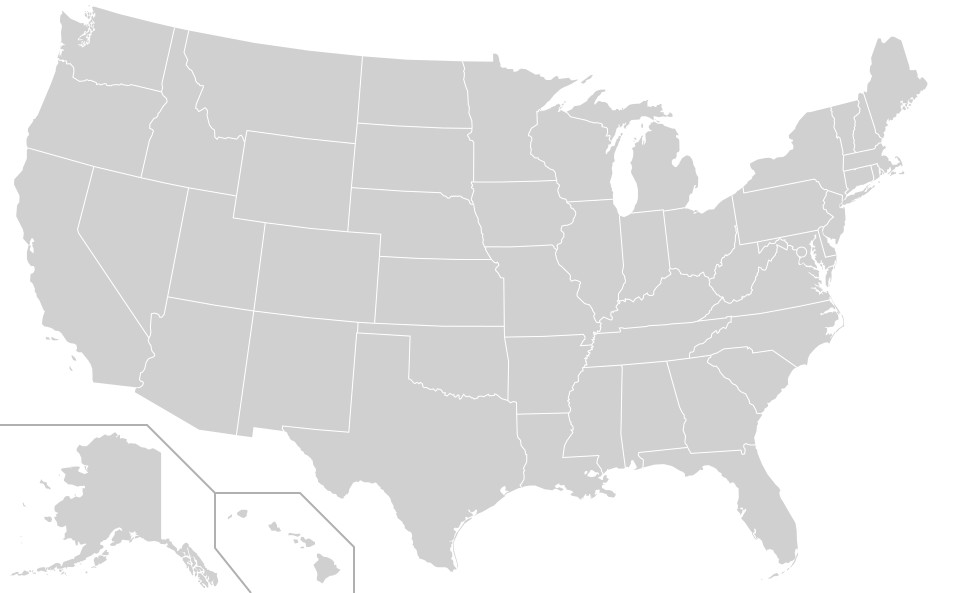
65+ active member builds, 300+ units in progress, across 20+ states. Click a market to see who is building there.
346
Units developing live
49
Markets
Location: Vancouver, WA
Farragut, Kenton, Ashley, Fircrest, Livingstone
Watch this project’s journey:
InstagramSee more on this project:
View the projectClick this market again for the next build here.
Your next step
New to development
A step-by-step challenge to line up your first deal, with our team beside you.
Join the ChallengeLive every week
Arthur and Ruben break down real deals and answer your questions in a live Q&A.
Join the live masterclassReady to build
Development consulting for people ready to put a real deal together now.
Explore consultingFree Resources
The templates, guides, and live sessions we hand every new member.
Real 2026 build costs for 43 US markets, from Arthur's own price map, with a live profit calculator.
Explore →Free PDFThe complete roadmap from land to sale, free.
Get it →Free AccessFree resources and every member story in one place.
Get it →Live WeeklyLive masterclass, weekly on Tuesdays. How to become a developer even with zero construction experience.
Get it →Free TemplateThe letter we use to reach lot owners directly, plus the training to use it.
Get it →Starter KitEverything you need to get moving on your first development, in one place.
Get it →Free CourseOur full 2.5-hour course on becoming a developer, land to exit, free on YouTube.
Get it →